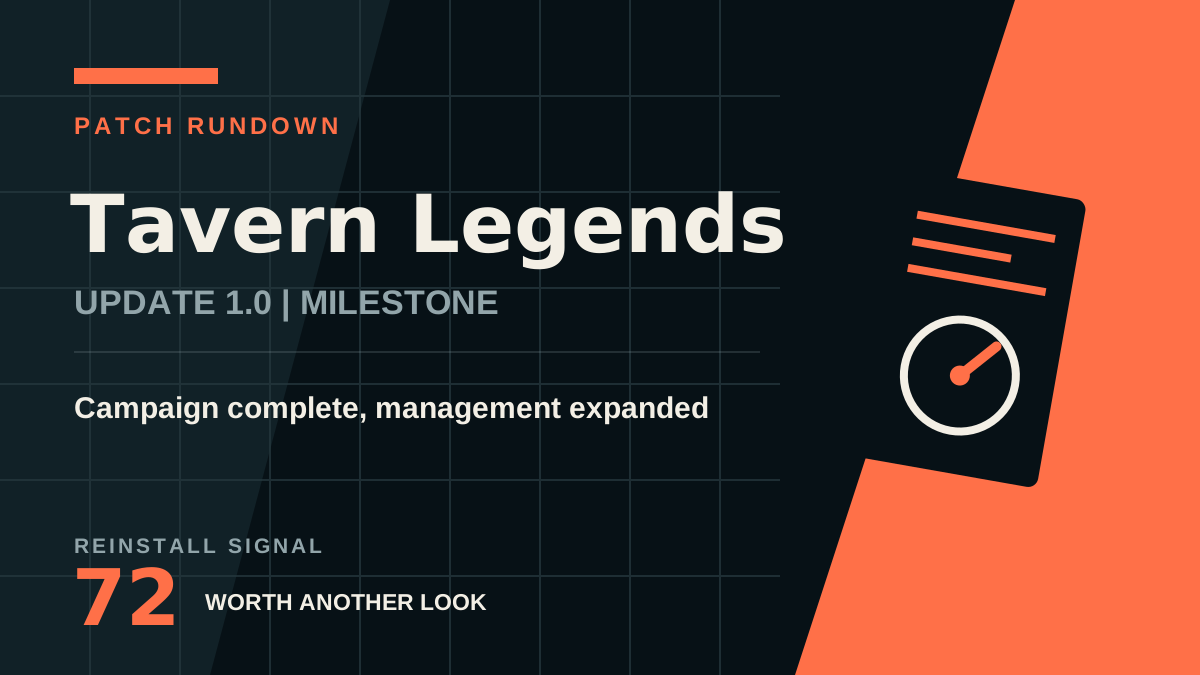
Tavern Legends left Early Access on July 17 with a campaign ending and a wider management game. Version 1.0 adds farming, garden plots, mushroom farms, reservations, a casino quest, fame changes, playstyle presets, and a large pass over workers, cleaning, lighting, and interface feedback.
The milestone release and its systems work produce an 87 Patch Impact score. The Reinstall Signal is 72: this is a meaningful completion point for owners, although it is an expansion of the established tavern loop rather than a different game.
The campaign finally has a destination
The most important launch change is completion. Fame progression and a new endgame sequence give long-running taverns a target beyond indefinite optimization. The casino quest adds another structured activity, while new inspector behavior changes how a successful business is judged.
Farming also makes supply planning more direct. Garden plots and mushroom farms add production decisions that previously sat outside the core tavern floor. Reservations create demand that can be anticipated instead of handled only as walk-in traffic.
Players who enjoy building a self-sufficient operation benefit most. Anyone who preferred the simpler Early Access rhythm may find that the added production and scheduling systems create more chores before the tavern feels efficient.
Management is easier to read, but not automatic
Version 1.0 adds playstyle presets and improves worker controls, cleaning, lighting, and interface feedback. Those changes should reduce the friction of diagnosing why service has slowed or a room is underperforming. They do not remove the need to learn how fame, staffing, supplies, and reservations interact.
The Returning Player Tax is B. The basics of building, serving, and hiring remain recognizable, but players returning from early builds should restart the tutorials and inspect the new production chain before restoring an old routine.
CROWFORGE Games says existing saves are compatible and also recommends a fresh game for the intended launch experience. That makes a new tavern the safer choice for seeing progression in order, while established saves are better treated as a shortcut for inspecting late-game systems.
Compared with earlier Early Access updates, 1.0 matters because it connects additions into a finished campaign instead of extending the sandbox one feature at a time. The unresolved question is balance: official notes establish the new systems, but not how smoothly reservations, inspectors, farming, and worker changes behave across a full campaign.
Who should restart now?
A fresh campaign suits players who want the launch systems introduced at their intended pace. Longtime owners who mostly enjoy decorating can keep an established tavern and inspect the new options immediately, but they may miss how fame, inspectors, reservations, and farming reshape early decisions. Players who disliked staffing pressure should watch worker behavior before expanding, because better controls do not eliminate the cost of poor scheduling. The launch favors methodical planners more than hands-off builders.
For lapsed owners, the campaign ending is a credible reason to return. Start fresh if the goal is to understand the full progression; keep an old save only if quickly testing the late-game additions matters more than pacing.
Launch follow-up: version 1.0.3
CROWFORGE Games released version 1.0.3 on July 18. The follow-up fixes leaderboard resets, main characters remaining after their quests, character clipping, an inspection-report crash, reservation achievements, and bug-report timeouts.
These are targeted launch corrections rather than a change to the verdict above, but the crash and progression fixes make the 1.0 campaign a safer starting point.