MARVEL Tōkon: Fighting Souls launched on PC and PS5 on August 6. The official Steam schedule put servers live at 8:00 AM PDT, 11:00 AM EDT, 4:00 PM BST, and 5:00 PM CEST, and listed midnight on August 7 in Japan. Pre-download was available on Steam, so the practical launch question was when a player could enter rather than when the files first appeared.
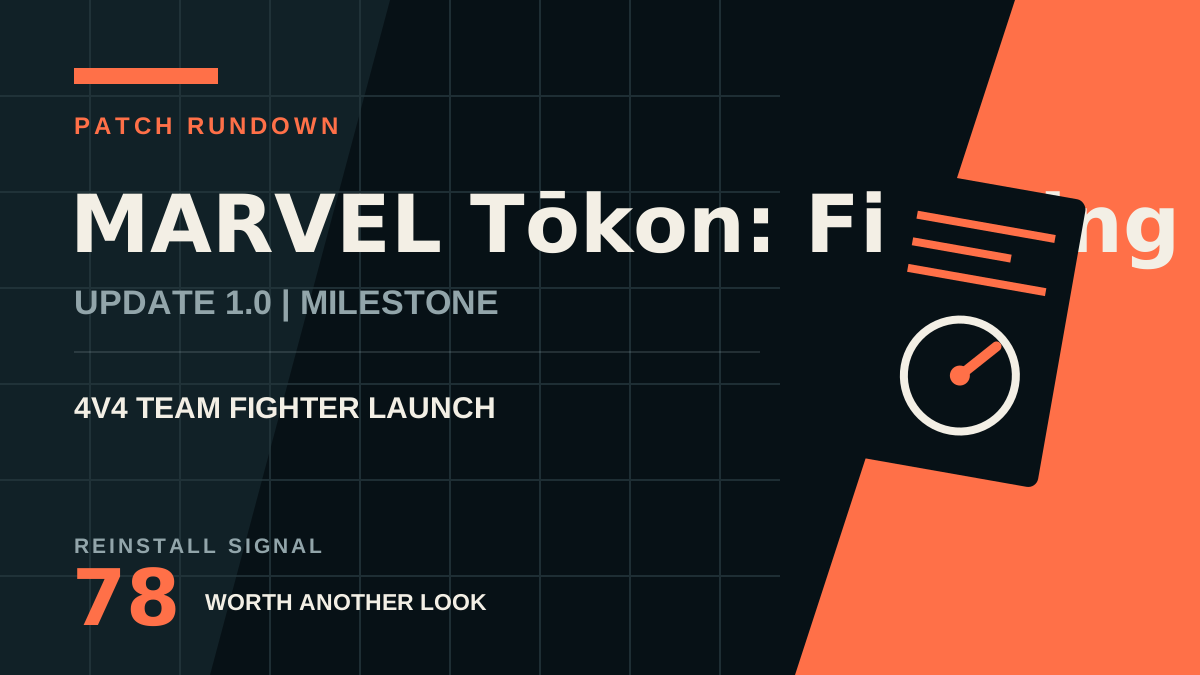
The release is built around 4v4 tag-team fighting and an expanding roster of 20 Marvel characters at launch. The Steam listing also confirms local and online versus, a 64-player online lobby, single-player Episode Mode, adjustable traditional or quick inputs, and stages based on Marvel locations. That combination earns a deterministic Patch Impact Score of 65, or Milestone, and a Reinstall Signal of 78, or Worth Another Look.
This is a release-day assessment based on official information, updated only to note what has happened since. It does not claim that the game has been played or tested, and the server schedule cannot answer every question about matchmaking, balance, online stability, or the feel of the controls.
The launch has a clear team-fighting identity
The important choice is not simply which Marvel character to pick. The game asks players to assemble teams for 4v4 tag-team combat, then discover how those characters work together. The official store description emphasizes team compositions, combos, synergies, and strategies rather than a single-character duel as the central structure.
That gives the launch a useful hook for returning fighting-game players. A familiar Marvel character can be the entry point, but the long-term learning path is likely to run through assists, tag timing, matchup coverage, and the relationship between four members of a team. Players who enjoy experimenting with rosters have more to explore than a simple character-select screen suggests.
The 20-character launch roster is large enough to create variety while still giving a new community a common starting point. It is also an explicit limit on what can be judged today. The store describes the roster as expanding, so the initial balance and team structure should be understood as a first competitive baseline rather than a settled final shape.
There is more than one way to learn the game
Episode Mode gives each team a single-player route into the cast and their relationships. That matters because a tag fighter can otherwise make a new player learn several characters at once with little context. The mode provides a reason to spend time with a team before entering a lobby.
Local versus and standard online versus cover the basic fighting-game loop. The online lobby can hold up to 64 players, which points to a social space around the matches rather than a menu that only sends two people directly into a fight. The official listing does not, however, independently establish how matchmaking, invitations, rematches, or competitive organization will work at launch.
Adjustable traditional and quick inputs lower the barrier to entry. That should help players who want to experience the characters and team systems before committing to a longer execution practice. The tradeoff is that veterans may want to understand how the input choices interact with advanced combos, and the official material does not provide a balance or tournament analysis.
Who benefits most from this launch?
Marvel fans who want a new way to build teams are the clearest beneficiaries. So are players who prefer fighting games with a strong local option, a story-facing mode, and a roster that can be learned over time. The 4v4 structure creates a genuine reason to return because it changes how a player thinks about matchups and composition, not merely which cosmetic version of a character is available.
Players focused on high-level online competition should temper the reinstall signal. A large online lobby is not the same thing as a healthy matchmaking population, and a published feature list is not proof that netcode, connection handling, or competitive routines feel reliable in practice. Those questions remain open until post-launch notes and observed player experience provide more evidence.
The same caution applies to players coming from another tag fighter. The controls may be approachable, but the relevant habits are still game-specific: four-character planning, tag timing, assist coverage, and the way each team spends its available tools. Franchise familiarity should help with motivation, not substitute for learning the system.
The returning-player tax is C
The Returning Player Tax is C. A returning player can understand the premise quickly, but needs to relearn the practical shape of a team: which characters cover space, which combinations create reliable pressure, how tags change a losing position, and whether traditional or quick inputs are preferable for the intended role.
The first return should therefore be deliberate. Start with Episode Mode or local practice, test a small group of teams, and use online play to answer specific questions instead of trying to absorb the whole roster at once. The 64-player lobby may become the social center of the game, but its size alone does not tell a returning player how to find the right match.
Is the August 6 launch a genuine reason to return?
Yes, especially for Marvel fans and groups looking for a fresh 4v4 fighter. Compared with a routine post-launch patch, this is a new baseline: 20 characters, team composition, local and online versus, Episode Mode, and a published regional opening schedule. The game has a recognizable reason to exist beyond licensed presentation.
The qualification is that this verdict was set on release day. The official schedule established when servers would open, while the store establishes the PC feature set. Neither source independently confirms balance quality, matchmaking health, online stability, or input feel. Players waiting for a mature competitive ecosystem should read the post-launch patch notes and community-facing updates.
For players who want the premise, August 6 was a real return point and the game is live now. Begin with a focused team, and treat the first sessions as the start of learning a new 4v4 system rather than as a final verdict on the game’s competitive future.
What has happened since launch
Arc System Works and PlayStation have shipped several updates since August 6. An August 10 update addressed PC performance problems such as frame-rate drops and CPU load spikes, and an August 21 update continued the PC performance work while fixing PS5 settings that reset on restart and a bug that could forfeit a match. Another patch followed on August 28. Launch coverage reports crossplay between PS5 and PC.
This report has not reviewed the full patch notes, so check them for balance and netcode changes before judging the current state of the game.
Patch Rundown metrics
- Patch Impact Score: 65 - Milestone.
- Reinstall Signal: 78 - Worth Another Look.
- Returning Player Tax: C - team composition, tag timing, input choices, and lobby expectations need a deliberate first session.
- Reporting basis: the official server schedule, the Steam listing, and launch-period coverage of patches; no hands-on testing is claimed.