Ludus Magnatus: Gladiator Manager Simulator is now live in paid Steam Early Access on Windows PC. The release turns a limited public demo into a complete management foundation: choose one of 16 clubs, begin in Division VII, recruit and equip gladiators, hire specialist staff, survive fully simulated seasons, and climb toward the imperial championship.
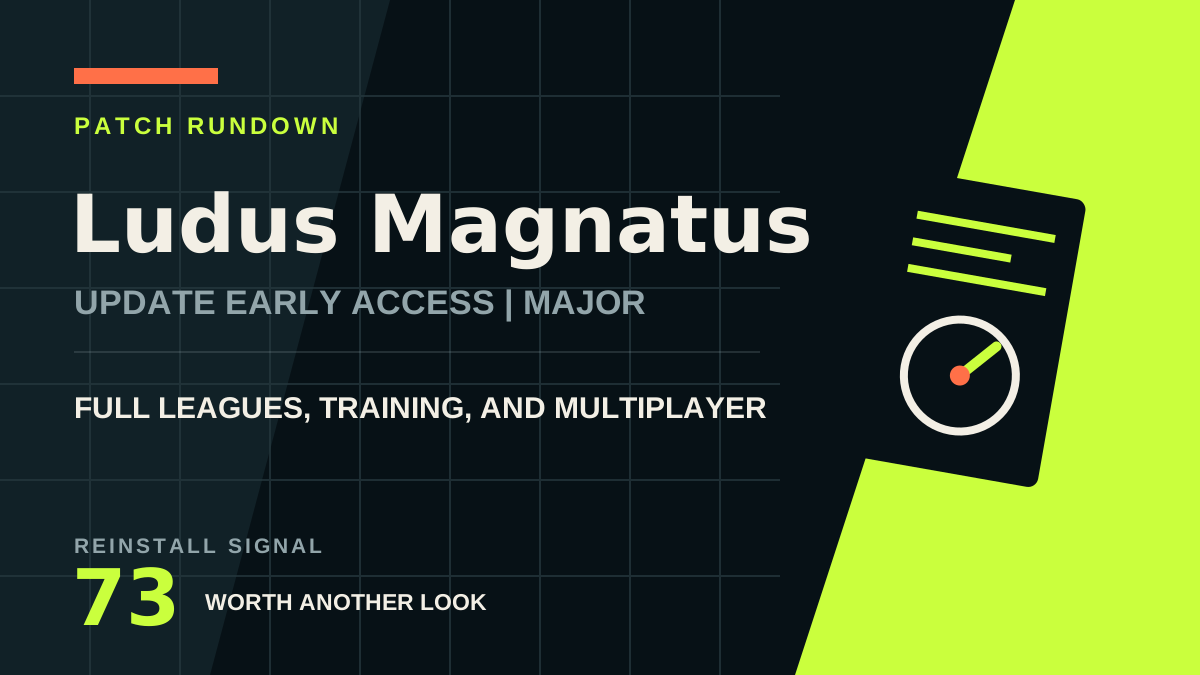
That earns a Patch Impact Score of 55 and a Reinstall Signal of 73, or Worth Another Look. The result is driven by the new full-season structure, a rewritten training system, deeper tactical control, and session-based multiplayer for as many as eight managers. It is not a verdict that the game is finished. Contec Games says balance, performance, usability, multiplayer stability, and overall depth will continue changing during Early Access.
The league creates consequences beyond one fight
Every player starts with a club in the seventh division and tries to win promotion through a complete season. Gladiators are recruited, equipped through the market, trained, and assigned to matches that play out under artificial intelligence rather than direct control. Results feed fame, experience, injuries, club strength, and the long route toward the top division.
That distinction matters. Ludus Magnatus is not an arena action game with a management menu stapled to the side. The player’s decisions happen before the fighters enter the sand: who gets equipment, who trains, which formation starts, which stance each slot uses, and whether an important veteran should risk another match.
The main beneficiaries are players who enjoy sports-management stories created by systems. A cheap recruit can become a star, a champion can be injured before a cup match, and a rival club can acquire someone another manager discarded. Players who want direct combat control lose out. The official FAQ is explicit that gladiators fight for themselves while the player manages everything around them.
Training now asks for permanent choices
The public demo used a simpler training structure. The Early Access build introduces Doctores: one gladiator can be retired into a training role, and that retirement cannot be reversed. The Doctores’ statistics become caps for what the rest of the roster can learn, while positive and negative traits can influence daily development.
That creates a useful management problem. Retiring a strong fighter may improve everyone behind them, but it removes a proven competitor from the arena. Replacing a Doctores is possible, yet the former trainer can return to competition for another club. A short-term upgrade can therefore become a future opponent wearing somebody else’s colors. Rome apparently discovered staff retention the dramatic way.
Training matches add combat experience without fatal risk, but injuries remain possible and can leave a fighter unavailable for as long as two weeks. A one-week cooldown prevents constant sparring. Players must decide whether extra development is worth losing a starter before a league or Champions Cup fixture.
Tactics matter without becoming direct control
Each formation slot can use an aggressive, balanced, or defensive stance plus an individual instruction. Combat experience is tied to fame, and the block and dodge baselines improve as a fighter becomes more seasoned. Those systems give managers more influence over how a roster behaves without turning a simulated bout into an action sequence.
The returning-player friction comes from their interaction. Equipment is only one part of readiness. A fighter’s traits, fame, experience, energy, injury status, formation slot, stance, and instruction all affect the decision to start them. Demo players who remember a simpler route to stronger statistics should not assume their old habits still describe the live build.
Compared with demo version 0.8.2, the largest change is not merely more content. In that demo, loyalty had no gameplay effect, while multiplayer, training, tactics, Lanista interactions, and broader management decisions were still listed as future work. Early Access brings the central training, tactics, and multiplayer pieces into a paid live release.
Multiplayer turns rival clubs into shared history
Multiplayer sessions support as many as eight players, with the developer saying the technical limit could rise later if demand exists. Hosts can limit new managers to Division VII, allow clubs from the host’s current division, or remove the division restriction. A player joining an existing save takes over the selected club’s current roster, equipment, and assignments rather than receiving a fresh team.
Matches against artificial-intelligence clubs send results back to the host. When two player-controlled clubs meet, both managers submit their selections and confirm the start before watching the same synchronized match. Contec Games notes that clients can be about half a second behind the host.
This design suits friends willing to advance a season together. It is less suitable for drop-in matchmaking because the official FAQ describes multiplayer as deliberately slow and session-based. The developer also says ongoing work will target multiplayer stability, so a smooth test season is not proof that every longer save or network condition is settled.
The launch patch fixes two immediate interface problems
Version 0.92.1A arrived shortly after launch. It restores the ability to close MainHub settings with the Escape key and adds a minimize button to the tutorial. Those are narrow fixes, but they establish that the released build is already moving and that the current experience differs from the exact launch-hour package.
The official material does not provide a comprehensive known-issues list. It does say balance, performance, usability, multiplayer stability, and depth remain active work. Patch Rundown has not played or tested the build, so there is no basis to claim that a league remains synchronized across a full season, that every interface path is comfortable, or that simulated combat is already balanced.
Returning Player Tax: C
The Returning Player Tax is C. The broad goal is simple: build a stronger club and earn promotion. The cost sits in the systems now surrounding that goal. A returning demo player must understand Doctores caps, irreversible retirement, sparring injuries, combat experience, formation stances, individual instructions, league and cup timing, multiplayer club ownership, and host division rules.
The best first session is a short single-player start in Division VII. Recruit conservatively, inspect the equipment market, learn how energy and injuries affect availability, and avoid retiring a valuable fighter before the Doctores tradeoff is clear. A multiplayer group should then create a separate test session and confirm invitations, club selection, save ownership, and synchronized match flow before committing to a shared long-term league.
Is this a genuine reason to return? Yes for players who liked the demo’s management premise but wanted a real season, meaningful training choices, and human rivals. The 73 Reinstall Signal reflects a substantial transition from preview to live foundation. Anyone waiting for settled balance, final usability, or proven long-season multiplayer should remain in the stands until Early Access has done more of its work.