Avatar Legends: The Fighting Game launched on PC on July 23 with 12 playable fighters, support-character team building, Story and Arcade modes, offline and online versus, Training Mode, and an art gallery. Its combat uses Flow for movement and Energy Points for enhanced specials and cinematic Super Arts. Rollback netcode and crossplay are advertised for online play.
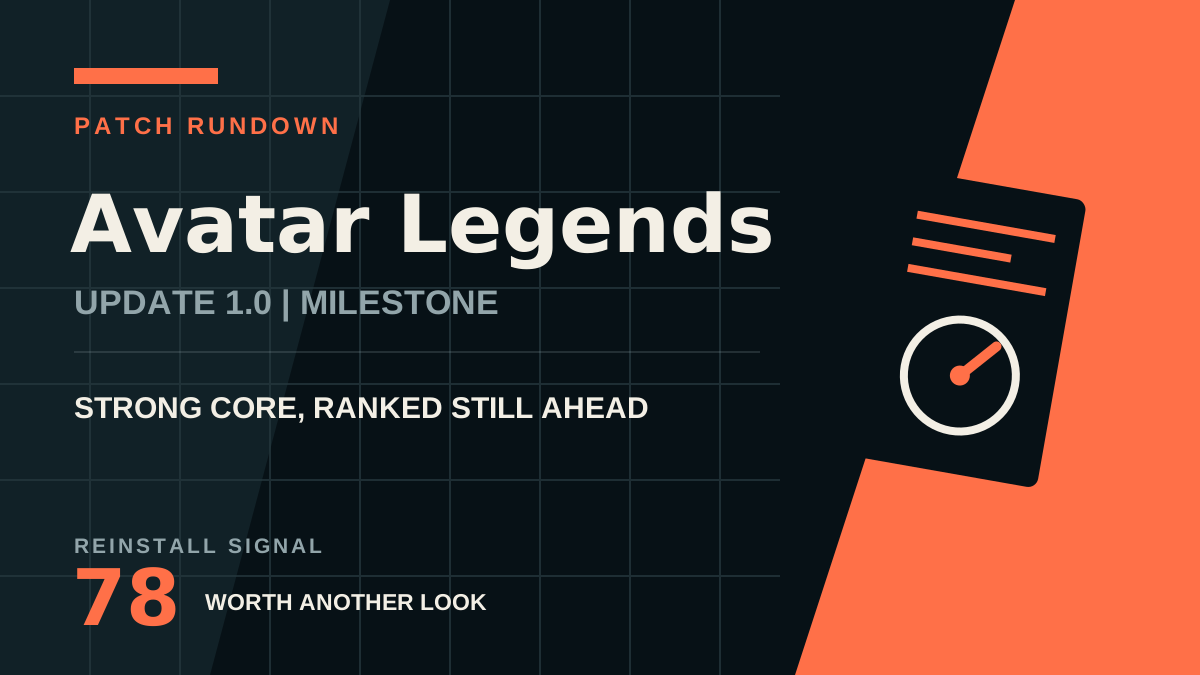
The milestone Patch Impact Score is 65. The Reinstall Signal is 78, or Worth Another Look. The launch has a meaningful game at its center, but players focused on ranked competition should understand which community features are still missing.
The roster is small enough to learn and broad enough to explore
The 12-fighter launch roster draws from Avatar: The Last Airbender, The Legend of Korra, and the expanded setting. Each fighter has a distinct style, while support characters add another layer of team construction.
That combination benefits players who enjoy experimentation without facing an enormous legacy roster. A returning fan can choose a familiar character, then use support selection to adjust pressure, defense, or combo routes. The smaller roster should make matchup study more manageable, although no hands-on balance assessment is recorded here.
Flow movement and Energy Points are the systems most likely to surprise players arriving from another fighter. Flow supports dashes and evasive movement; Energy Points reward effective play with stronger specials and Super Arts. Learning when to spend movement and offensive resources is more important than relying on franchise familiarity.
Solo players receive a complete starting structure
Story Mode uses an original plot outlined by series creators Michael Dante DiMartino and Tim Hedrick. Arcade Mode gives each playable character a separate storyline. Offline versus, a gallery, and advanced Training Mode round out the non-network package.
Training Mode includes hitboxes, frame data, and save states. Those are serious learning tools, not a decorative tutorial. Players who want to understand spacing, punish windows, and repeatable setups can do that without waiting for post-launch features.
This is the launch’s strongest defense. Even if online population or matchmaking changes, the game has story, arcade, local play, and technical practice tools available now.
Online play has strong plumbing and missing rooms
The store advertises rollback netcode and crossplay. Those are important foundations for a fighting game, but they are not proof that every match is smooth across every connection. This report does not claim independent testing of latency, matchmaking, or cross-platform reliability.
The launch newsletter lists Ranked Mode, lobbies, Spectator Mode, and keyboard mapping as top requests being prioritized for future patches. That means players can fight online, but the competitive structure around those fights is incomplete.
Ranked-focused players may reasonably wait. Friend groups that expect private lobbies should verify the current invitation flow before buying. Tournament organizers need Spectator Mode, and keyboard players should not assume the launch mapping meets their needs.
Who should play now
Avatar fans interested in the original story, local versus, or learning a new fighter have a clear reason to start. Players who enjoy training-lab work also receive unusually useful frame and state tools at launch.
Players seeking a mature ranked ladder, organized rooms, or spectator support should monitor the first patches. Those omissions are not small conveniences for a competitive fighter; they determine how easily a community can practice and run events.
Returning Player Tax: C
The Returning Player Tax is C. Begin in Training Mode, learn Flow and Energy Point rules, test a main fighter with several supports, then move into Arcade or casual online play. Compared with the prelaunch modes announcement, the live release confirms that the promised solo core is available. The launch newsletter also makes the next gap explicit: post-launch work must build the competitive shell around it.