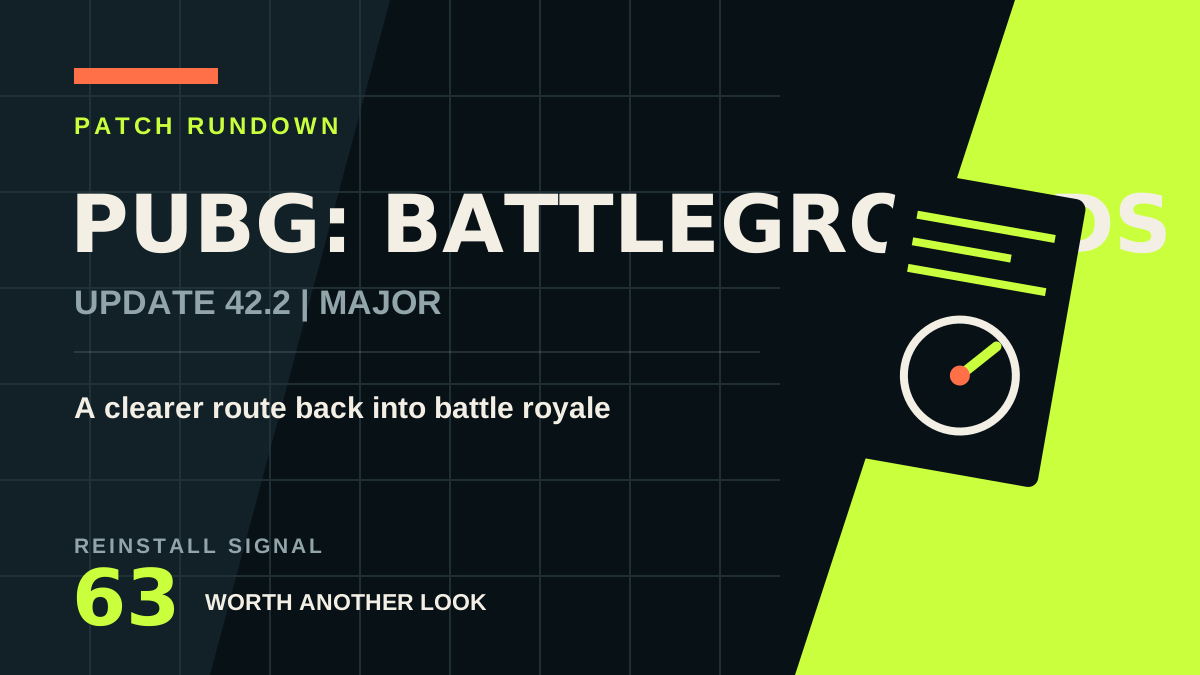
PUBG: BATTLEGROUNDS Update 42.2 went live on PC July 15, with the console release scheduled for July 23. It rebuilds Basic Training, changes parts of Taego and Rondo, returns Hot Drop for a limited run, and prepares a new Solo Deathmatch service. The patch is less of a competitive reset than Update 42.1, but it is more approachable for someone trying to remember how PUBG works.
Those changes produce a 57 Patch Impact score. The Reinstall Signal is 63 because the training overhaul tackles genuine returning-player friction and the compact modes offer a faster route to useful fights. The staggered console rollout and limited service windows keep this from being an unconditional reinstall.
Basic Training becomes an actual return ramp
The most broadly useful change is the revised Basic Training sequence. KRAFTON has broken the onboarding into clearer steps so movement, looting, weapons, vehicles, and the path into a match do not arrive as one undifferentiated lesson.
That matters in a mature battle royale. A returning player is not only relearning controls; they are reacquiring the pace of looting, positioning, shooting, and moving before the circle closes. A structured refresher lowers the cost of making those mistakes in a live match.
Brand-new players and anyone returning after a long break benefit most. Regular squads gain less because the patch does not replace the knowledge that comes from real rotations, team communication, or reading other players. Basic Training can teach the interface and rules, but it cannot recreate the pressure of a full lobby.
Taego and Rondo will not play exactly as remembered
Update 42.2 changes map details on Taego and Rondo. Normal players will notice altered spaces and encounter flow before they notice a numerical balance adjustment. Returning players should spend their first matches reading the terrain again instead of assuming every familiar route and sightline still behaves the same way.
The Returning Player Tax is B. PUBG’s looting, gunplay, and circle logic remain recognizable, and the new training route helps, but map knowledge is perishable. The patch rewards players who treat the first session as reconnaissance rather than immediately chasing an old drop routine.
Hot Drop also returns on a limited schedule. Its compressed action is useful for players who want repeated combat without waiting through an entire battle royale match, though anyone looking for the strategic pacing of normal matches will find it a poor substitute.
Solo Deathmatch creates a cleaner individual warm-up
Solo Deathmatch is the clearest new-mode hook. It removes team dependency from a short combat format and gives individual players a place to work on target acquisition and survival under constant pressure. Its service begins after the main patch rollout, so availability is not identical to the base update’s release date.
That scheduling distinction matters. PC players received the core 42.2 build first, console follows later, and the returning modes have their own windows. Players reinstalling for a particular activity should check the official schedule instead of assuming every part of the patch is permanently active.
Update 42.1 made the larger systemic moves: it changed Blue Zone behavior, healing, Ranked progression, weapon balance, and PC controller support. Update 42.2 is narrower. It improves the journey back into the game and creates more opportunities for concentrated combat, but it does not overturn the survival and ranking rules introduced a month earlier.
The official notes do not establish that matchmaking, performance, anti-cheat concerns, or every long-standing map complaint has changed. KRAFTON also warns that announced features can change or be removed when issues arise. This is a credible reason to return for lapsed players who wanted a safer refresher or faster solo fights; veterans waiting for a new permanent map or a sweeping gunplay pass have less reason to reinstall on 42.2 alone.